
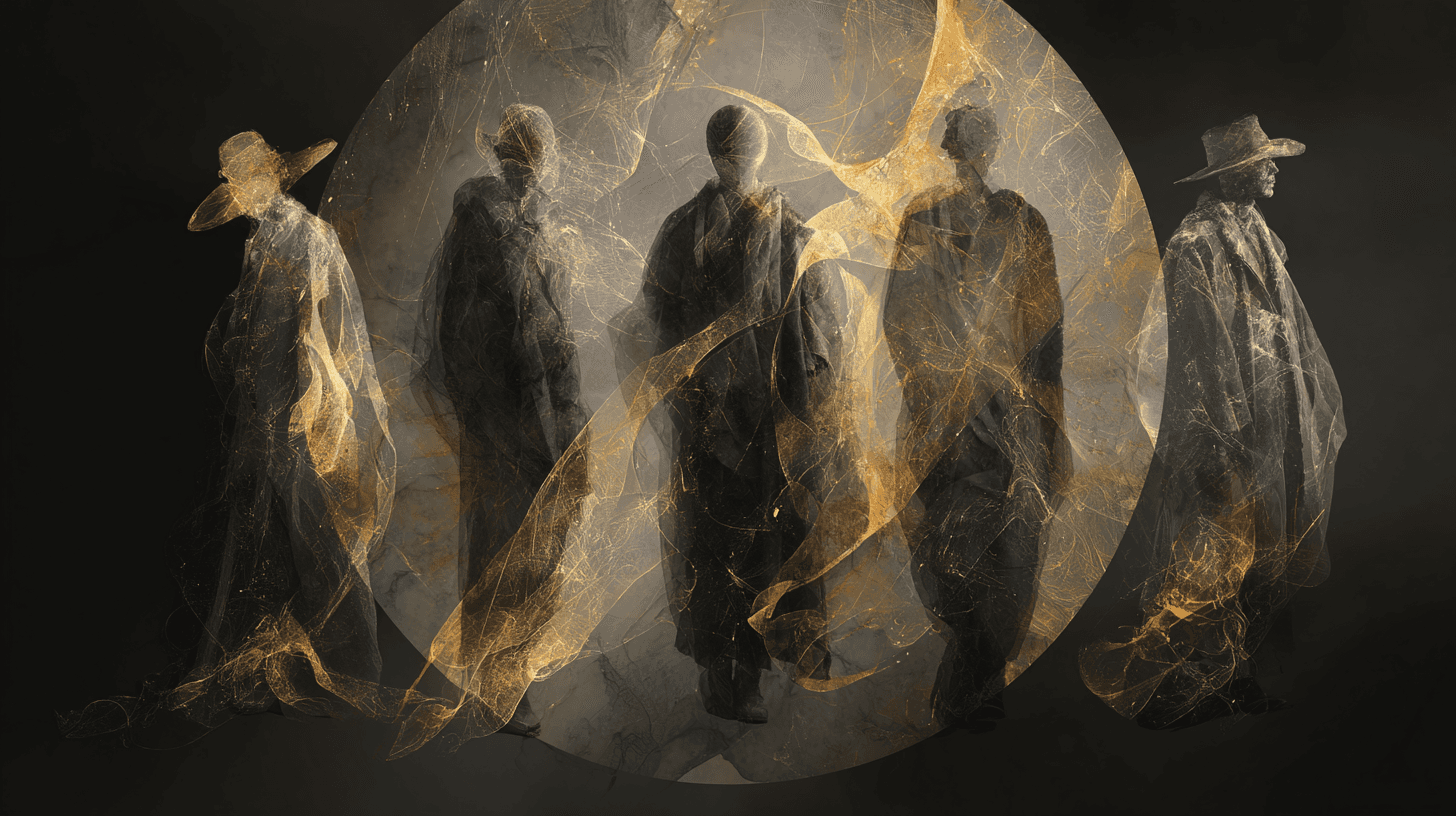
Learn what Carl Jung's archetypes are, which are the most important ones, and how to identify them in your own psychology for deeper self-knowledge.
Jungian Archetypes: The Universal Characters of Your Psyche
Carl Gustav Jung, the great Swiss psychologist of the twentieth century, proposed that all human beings share a common repository of images and symbolic figures: the collective unconscious. Within that repository live archetypes — universal patterns of behavior and energy that express themselves in myths, dreams, fairy tales, and our own daily lives.
Knowing your dominant archetypes is one of the most powerful tools for self-knowledge.
🃏 Jung's Main Archetypes
The Self
The center of the total psyche, the aspiration toward full integration. The Self is not the ego: it is the goal of the individuation process.
The Shadow
Everything we have rejected or repressed in ourselves: the impulses, fears, and qualities we do not accept. It is not necessarily "evil" — it also contains undeveloped potential. Ignoring the Shadow makes it more powerful.
The Anima / Animus
- Anima: The feminine dimension in the male psyche. It expresses itself as intuition, emotional connection, and creativity.
- Animus: The masculine dimension in the female psyche. It appears as assertiveness, logic, and the capacity for action.
The Persona
The mask we show the world. Our social identity, the role we play. The problem arises when we identify so strongly with the Persona that we forget who we are behind the mask.
The Hero
The archetype of overcoming, courage, and the journey toward maturity. The Hero faces their fears to find their true purpose.
The Wise Old Man / Woman
The voice of experience, the inner guide. It represents knowledge that transcends reason.
The Trickster
The archetype of creative chaos, humor, and the transgression of norms. Often necessary to break rigidity and open new perspectives.
The Great Mother
Archetype of care, nourishment, and fertile earth — but also of overprotection and control. It relates to heart chakra dynamics and deep family patterns.
🌀 How to Recognize Your Dominant Archetype
Observe:
- What kinds of stories or films move you deeply?
- Which characters do you identify with without quite knowing why?
- What qualities do you most admire in others (and perhaps don't allow yourself)?
- What irritates you most in other people? (Irritation often points to the Shadow)
🧠 Archetypes and Oracles
Tarot, the I Ching, and the Jungian Archetypes system share a common foundation: all of them work with universal symbolic images that speak directly to the unconscious. It is no coincidence that so many Jungian psychologists use Tarot as a therapeutic tool.
Want to examine a change from another perspective? Consult the I Ching for free at Vital Oracle.
Related resources
Tarot and spread positions
Learn how a card meaning changes with its position in the spread.
The Rider
News, messages, movement
I Ching with one changing line: how to read a precise adjustment
Guide to interpreting a single changing line and detecting the exact point where the process asks for correction.
1. Qian - The Creative (Heaven)
Heaven represents pure creativity, primordial force and ceaseless action. It is the archetype of initiative, power and leadership. When it appears, it indicates a moment of maximum power to manifest your desires.
The Fool
New beginnings, spontaneity, freedom.